
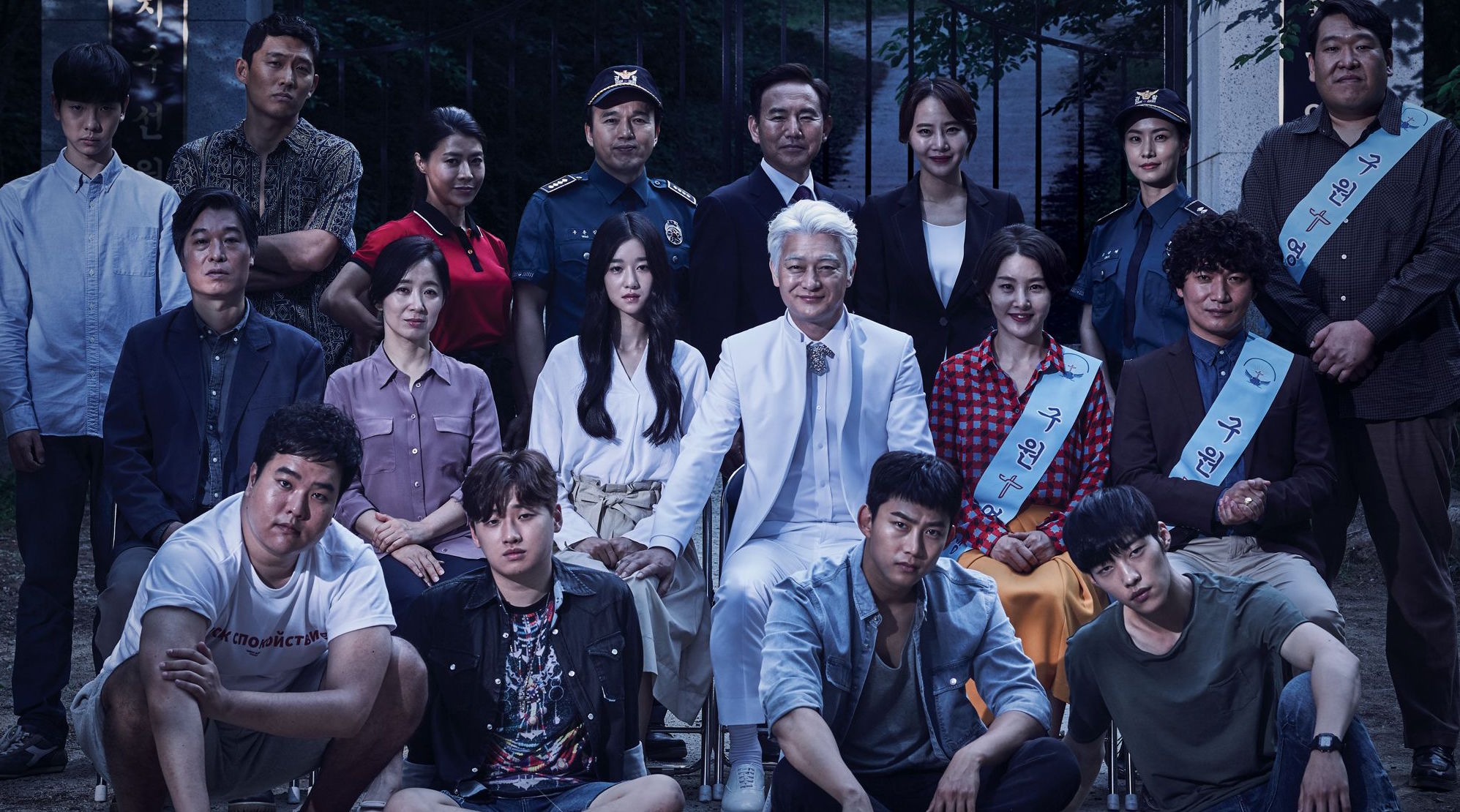
Watching Save Me (Rescue Me) is less like watching a TV show and more like witnessing a slow-motion psychological car crash that feels uncomfortably close to home.
When Sang Mi’s parents join a religious cult, it begins a game of cat and mouse between the young woman and a manipulative con man who wishes to steal her virtue. So, is Save Me a Kdrama worth watching?
The Architecture of Fear: Why Save Me is More Than a K-Drama Review
By weaving my own experiences with the rigid, silent expectations of private Catholic schooling into an analysis of the Guseonwon cult, this review will explore how grief and socio-economic desperation are weaponized through the “Salvation Stratagem.”
A Journey into the Human Psyche: Grief as a Weapon of Control
Beyond the screen, we’re diving into the “rabbit hole” of real-life pseudo-Christian sects like Shincheonji, uncovering how a culture of institutional silence and parental betrayal allows these organizations to thrive in the shadows of South Korea’s mountains.
It is a haunting exploration of the human psyche that asks a terrifying question: when your own family chooses a “Spiritual Father” over you, where is there left to run?
Private Silence vs. Public Outcry: How Institutions Process Trauma
It’s been a while since I’ve felt this way. That feeling where you are legitimately terrified for someone you are watching onscreen.
A feeling that is often left out of modern cinema and tv shows – that favor spoon-feeding their audience while simultaneously dumbing down their IQs.
This is not to say that you have to have a certain level of intelligence to watch or even enjoy Save Me. To be fair, even if you’ve ever been wrapped up in a religious organization, you could have the potential ability to recognize some of the tactics displayed in the drama by the Spiritual Father.
My (Brief) Religious Experience
Growing up, I attended a private catholic school from nursery to 8th grade. I won’t say much, but many awful things happened there. The nuns were mean, and the priests were a little too touchy-feely.
Every so often, there would be a new music teacher, because something happened and the last one inexplicably left. Likewise, we could always look forward to the newest installment of our Spanish class teacher, whom we as a collective bullied and treated horribly to the point that grown men and women were afraid of absolutely wretched children.
I say we, because that school was a collective effort.
Steal candy out of the teacher’s desk?
Okay, one person is the lookout in the classroom, another by the window, and one on the playground. Using hand signals, the theft was coordinated, and hushed lips were expected from those not involved.
Need to pass a class?
Let’s all devise a system to cheat simultaneously using noises, hand signs, and hidden notes flung around the room while the teacher’s back is turned. Any weak links would be bullied ruthlessly.
As I type all of this, it may come across that I am anti-religion. I’m not. I mean no offense to any practicing Catholics or otherwise Christians who come across this post. I’m merely sharing my own personal experiences to prove a point.
So…why did I open with all of this?

Well, today we’re going to talk about a cult. While simultaneously reviewing an amazing kdrama series called Save Me. Many Christian cults, actually, as it seems pseudo-religious sects have been prevalent in South Korea for some time now.
While watching Save Me, I was trying to figure out why my mom left me in that Catholic school system for so long. Growing up, she always told me that she wanted me to “learn how the world works” so that I “wouldn’t be wild” like those “public school” kids.
Well, I went to public school for high school, and those were some of the best and most liberating years of my life. It’s funny – I realized just how dumb I was interacting with those kids. They didn’t know certain things I did from an intellectual ‘book smart’ standpoint, but socially, they were leagues ahead of me.
Looking back, I really think public school kids get a bad rap. Their parents are usually working 2-3 jobs trying to make ends meet, and many teachers target these students as “problem kids”.
With enough suspensions for petty fights or verbal disagreements with “authority”, they have lowered self-esteem and a paper trail of instigated records calling them “disruptive”, “argumentative”, and “insubordinate” simply for questioning the teachers or defending themselves against attacks.
That was the first difference, I noticed.
In public schools, those kids wore their hearts on their sleeves. They spoke their mind, and accepted the punishment – even to the point that they went down fighting.
In private schools, it’s different. You are expected to say nothing and be docile. Then slowly but surely, you covertly get your revenge.
This may sound odd, but I think both institutions teach you how to process grief differently. One lets it out, while the other bottles it until those feelings become something perverse and unrecognizable.
I know this was kind of long-winded, but I think that is the best analogy I can figure up to summarize what watching Save Me was like: an exploration of grief, and the various expressed outlets of it.
The “Salvation Stratagem”: How Guseonwon Preys on Human Grief
Save Me (also known as Rescue Me) is a 2017 South Korean TV series that follows the entrapment and eventual escape of a young woman named Im Sang Mi from a religious cult.
The 16-episode psychological thriller and mystery series has moved away from Netflix and can now be watched on streaming platforms like Tubi and Amazon Prime.
Targeting the Destitute: The Im Family’s Descent into Muji County
The series begins with the Im family moving from Seoul to this rinky-dink mountainous town. Despite its almost rundown appearance, there are many rich and influential people within the city’s boundaries.
The Prince of Mooji (and son of the governor) Han Sang Hwan struts around town on his piece of crap moped with his band of merry followers: Woo Jung Hoon (son of a local police officer), Choi Man Hee (son of a local mechanic and garage owner), and Seok Dong Chul – the odd man out.

Dong Chul is poor, and his father was an abusive drunk.
He lives with his grandmother, and although the crew formed a tight bond, in the back of your mind, you have to wonder if they are just hanging out with Dong Chul as a sort of ‘charity’ for their privileged station in life.
Why do I say this?
Well, because his ‘friends’ essentially abandon him once it’s no longer convenient to be supportive of his social status.
What led the Im Family to join the Pseudo-Christian Religious Cult, Guseonwon?
So, remember I mentioned the Im family? They arrive in Mooji destitute after the father was scammed into buying a vacant piece of land.
This puts strain on the Im family, and instead of packing up and high-tailing it back to Seoul at the insistence of his daughter Sang Mi, father Joo Ho decides to stay and find work with a local cattle farmer.
With no real place to stay (and the guilt of bringing his family into poverty), Joo Ho decides to take the farmer up on his offer of meeting the local religious leader – Spiritual Father Baek Jung Ki of Guseonwon Church.
Despite being a KFC Colonel look-alike, this man is bad news.

Miracle Water and the “Boat of Salvation”: The Symbolism of Guseonwon

The apostles Father Baek surrounds himself with are playing a very dangerous game – to ride that Big Ship of Salvation into “The Mighty New Sky” – or at least that’s what their mission statement claims.
Soon after, the Im family patriarch is convinced into moving his family into Guseonwon – a Pseudo-Christian Religious Cult mirroring a real-life alleged cult named Shincheonji Church of Jesus, and the Spiritual Father sets his sights on his new intended Spiritual Mother – Joo Ho’s 17-year-old teenage daughter Sang Mi.
Just when you think things can’t get any worse for this family, 17-year-old Sang Mi’s twin brother Sang Jin is being bullied at school. With no other emotional outlet, he decides to take his life one day on the school rooftop.
Sang Mi runs around and begs Prince Mooji and his band of merry fellows for help, and only one person comes through – the kind-hearted (but poor) Dong Chul.

Despite defending Sang Jin (and himself) from attacks, he is eventually arrested and sent to juvie for the unintentional paralysis of one of the (wealthy) bullies.
Prince Sang Hwan wants to help, but is told by his father, as the situation unfolds, to wait until he is re-elected as governor – and then he will pull some strings.
Three years pass, and when Dong Chul is released, Governor Han Yong Min tells his son (after being caught in a lie) that there was nothing he could do, and besides, Dong Chul paralyzed the son of a wealthy man in the community.
“Why would (he) stick up for someone like that?” – the Governor suggesting that it was simply Dong Chul’s fate to be a criminal.
While Prince Sang Hwan is wringing his hands in rich boy problems, and the son of the cop (Jung Hoon) is generally apathetic to the situation, the only one who shows any real care is Man Hee.
But as Man Hee is now lower on the pecking order in the social hierarchy of the group, he rarely says anything (or shares his feelings) unless it is suggested by another member.
While these boys are caught up in their own meandering lives, the death of her brother rips Sang Mi’s family apart. Her mother, Bo Eun, is inconsolable.
Reborn in Ashes: The Death of Im Joo Ho and the Rise of Apostle Im
Despite trying everything in the natural order of emotional healing (by way of talking, communicating, and even outright screaming at her), Joo Ho takes his wife to a Shaman.
The Korean shaman may or may not have had any actual spiritual power or healing techniques. Even at the end of the series, when questioned about his abilities by another character, he is intentionally vague, and it is left a mystery.
The shaman does, however, have some business acumen, demanding more money for another healing session with Bo Eun. He promises Joo Ho he’ll “up the ante” of his possession skit to try and force emotional closure so that his wife can return to ‘normal’.
When Joo Ho pleads with the man that he has nothing left, we learn that he even used the condolence money from his son Sang Jin’s funeral to pay for this charade.
Once her mother is out of earshot, Sang Mi berates her father for booking another appointment with the charlatan, and pleads with him one last time to return to Seoul. There, Sang Mi makes a case that her mother can get better in the modern city’s hospital facilities.
Joo Ho’s answer to his daughter’s desperate plea is to sell his car – and the family’s only way out of the hellhole town known as Mujin.
Im Joo Ho Meets Apostle Kang
There is this really chilling scene of Joo Ho meeting with Apostle Kang where she offers him some lunch. Knowing the family is homeless, destitute, and hungry – she utilizes the “Salvation Stratagem” that she teaches the warriors of the Mighty New Sky.

“…If you use the Salvation Stratagem correctly, you shall be greatly rewarded. As we are doing a good thing by saving people through the power of faith, the Mighty New Sky will actually look upon us as being righteous. Do you Understand? ”
“I believe.” “We will be blessed”
Apostle Kang’s exchange with the warriors of the Mighty New Sky
Which, as the Spiritual Father later points out to Apostle Kang, is essentially lying until the end justifies the means. Joo Ho then receives the “Water of Life” from Apostle Kang and is anointed into the Parish of Guseonwon.

Believe it or not, this is also the scene of Im Joo Ho’s death.
In his wake and reborn from the ashes of fear, guilt, and unbelievable shame mixed with lies is Apostle Im – the most devoted follower of the Mighty New Sky and Spiritual Father to date.
So devotional – he would willingly sell his wife, daughter, and deceased son to the Spiritual Father if it meant there was even the slightest chance he could ride the Ship of Salvation into The New Sky so that he could live with his family forever.
Never mind that they are right beside him, suffering from his actions and religious zeal. You know, I’m also going to go out on a limb and say that after a certain point, Apostle Im decided to really play up his role and position of power in the church.

After becoming head exorcist and an important part of the Spiritual Father’s entourage (not to mention the earthly father of the soon-to-be Spiritual Mother), deep down, he knew those actions were wrong.
Beyond the Script: The Real-Life Shadow of Shincheonji in South Korea
After watching this Korean drama, of course, I did some digging.
Apparently, pseudo-Christian religious cults like Guseonwon Church are quite prevalent in South Korea – the Save Me drama is based on a popular webtoon called Out of the World by Jo Geum San.
While it’s not certain whether webtoon artist Jo was inspired by true events from their own real life, they may certainly be based on their observations of South Korean society.
Is Guseonwon Real? The Disturbing Parallel to the Shincheonji Church of Jesus
According to an internet consensus, the religious organization Guseonwon appears to be based on the real-life (alleged) cult Shincheonji Church of Jesus, the Temple of the Tabernacle of the Testimony.
Infiltrating the Modern World: Front Groups, Charity, and “Mannam”
Just simply skimming the church’s history, Shincheonji, and its founder Lee Man-hee seem to be embroiled in scandal after scandal. Chiefly, for approaching unsuspecting Koreans and foreigners on the streets to take free Korean language lessons, and help orphans through charity.
Mannam now seems to be the new front for Shincheonji, putting on events that call for global unity, or teaching eager foreign language students their slogan “When light and light meet, there is victory” in Korean.

Speculation on the goal of this outreach ranges from creating evangelical pockets that will transcend South Korea’s national borders (such as the alleged cult World Mission Society Church), to utilizing the foreigners’ images in promotional materials to legitimize Mannam as an international charity organization, thus making it more popular and attractive to Korean citizens.
If you’re interested in more info regarding this phenomenon of religious movements promoting fringe doctrine in South Korea, here is a thread from WayGook 16 pages deep on info surrounding (alleged) religious cults Mannam, Shincheonji, and anything else you want to know.
Also, you can utilize the Internet Archive Wayback Machine to view web pages that no longer exist, but were screenshotted from years ago.
The Socio-Political Climate: Why Korean Society Is Susceptible to “Pseudo-Sects”

So, what do you think about all of this?
I stayed up really late the night after I finished watching Save Me, exploring the Christian Korean Cult rabbit hole. I kept wondering if those drawn to real-life organizations that are fronts for cults also preyed on people’s grief, loneliness, and shame as Guseonwon did in season one of this kdrama.
I didn’t go much into it (mainly because I want you to watch this series for yourself), but every single character in this story was afflicted with grief in some way. Only those who dealt with, accepted, and processed their inner turmoil and pain made it out alive – so to speak.
Which is admittedly difficult in a hyper-conservative culture like South Korea, where social appearances and status are everything, and (the perception of) public shame could come from the result of the simplest things.
The Ambiguous Happy Ending: Does Anyone Truly Escape the Cult?
Save Me is a fantastic drama with very good, poignant moments that leave you continually surprised at what a powerfully brave woman Im Sang Mi grows up to be. Although Sang Mi and her mother Bo Eun escape Guseonwon Church and live happily, her father Apostle Im never quite returns home.
Despite forming a close bond and saving her from a marriage with Father Baek, Dong Chul and Sang Mi remain friends by the end of the series, and any romantic overtones are chalked up to a deep friendship.
The Resurrection of Grief: Apostle Kang and the New “Mighty New Sky”

While Apostle Kang turns her back on the teachings of Father Baek and realizes the Spiritual Father’s role in her own daughter’s death, Apostle Kang seemingly starts a new cult in lieu of the hole Guseonwon filled for her undealt with grief.
Despite characters like Dong Chul being reunited with loved ones who were stolen and held prisoner by the church, or Sang Hwan, who finds out the truth of his ailing mother’s condition, ultimately, our characters’ true fates are left ambiguous in the flux of the cult’s demise.
In that regard, Save Me ends on a note that is realistically happy in the morally grey and cold world of isolation and grief it perfectly portrays.
Breaking the Cycle: Sang Mi and the Cost of Survival
“Rescue Me” is a dark tale of the human struggle with grief so strong that it can alter reality, alienate friends and family, and leave you wondering how many people today are living in such a harsh reality.
Hopefully, that message came across adequately in this kdrama review.
The apostles, the volunteers, even the Spiritual Father, on a level – I say this because we never got the full explanation of his criminal background – were lost souls trying to deal with a warped perspective of our world.

(This show’s synopsis reminded me of a certain character who was a devout Christian being abused by her boyfriend in a drama called ‘Age of Youth’.
Despite having no knowledge of cult sects in Korea or their horror stories back then, I had always thought the nonsense that character spouted when faced with situations that opposed her religious beliefs sounded way too…culty. I don’t remember if the leader of her church congregation was revealed to be shady, or not. )
If you’ve seen the series, do you view Sang Mi’s father as a villain for exposing his family to a religious cult? Or did he just go ‘crazy’ after experiencing so many incredibly disturbing situations while in the Guseonwon community?
Why do you think that, as a young girl, Sang Mi could see through the organization that completely pulled in her parents, and forever altered her reality?
Leave your thoughts in the comment section below, I’d love to hear from you! Also be sure to follow us for more Kdrama Reviews!
☆ In Asian Spaces ☆ Ephesians 6:12 ☆


Leave a Reply