
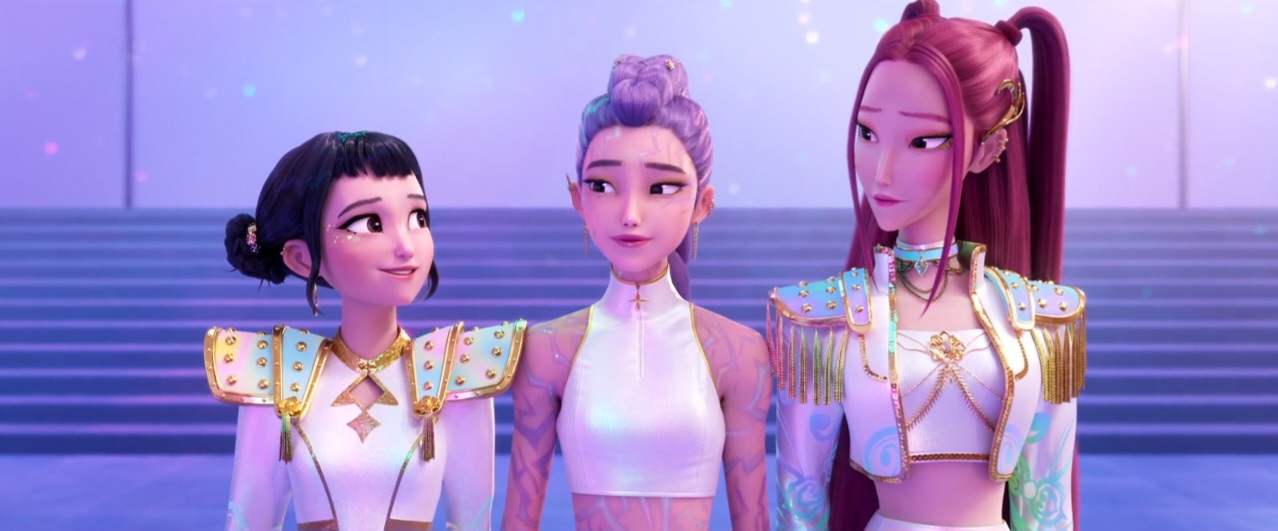
I’ll be the first to admit it: I don’t usually do K-pop, and I’ve never been one for musicals. Going into Netflix’s KPop Demon Hunters, I was certain I had the film pinned as a flashy, trope-heavy distraction. I couldn’t have been more wrong.
What I found beneath the neon lights and catchy hooks of Huntrix—the power trio of Rumi, Mira, and Zoey—was a visceral, high-concept narrative that manages to weaponize the “Idol” aesthetic into a legitimate weapon against the darkness.
It turns out that fighting demons and writing chart-topping hits for fans isn’t just a gimmick; it’s a masterclass in subverting the typical “Hunter” archetype.
Thematic Pillars of the Hunt
Before we dive into the frequencies of the Honmoon, here are the core themes that redefine this film:

- The Frequency of Healing: How Rumi, Mira, and Zoey use vocal resonance not just to perform, but to repair a fractured world.
- The “Saja” Subversion: A deep look at the Saja Boys, whose Joseon-era “Grim Reaper” aesthetics mask a predatory form of mind control.
- The Weight of the Mask: Exploring the psychosomatic link between grief, trauma, and the literal loss of one’s voice in the face of evil.
- Indie Soul vs. Industry Standards: The friction between Mira’s “delinquent” personality and the rigid expectations of the Hallyu wave.
Beyond the Catchy Tunes: Unexpected Depth in KPop Demon Hunters
First, the film seemed to portray the eternal struggle between good and evil – light and darkness. A trio of girls forms a musical group through the generations and using the frequencies of their powerful voices combined – heal and change the world.
Breaking the Mold: Rumi, Mira, and Zoey’s Unique Character Dynamics
The Kpop girl group Huntrix consists of Rumi, Mira, and Zoey.

Rumi’s parents passed away and she was raised by her late mother’s friend and former idol demon hunter, Celine. Somehow, a demon hunter and a demon had a child that should not exist, but does based on a promise Celine made to protect the last bit of her friend left in this world – Rumi.
Despite the fact that she’s technically not supposed to be here, Rumi is protected from the dark influence of Gwi-ma and can fulfill her duties of sealing away the evil entity for good through song using the Honmoon.
Mira is the typical misunderstood daughter who doesn’t live up to her family’s standards. Honestly, if she wasn’t in the group, she would most likely be a delinquent. Throughout the film, they mention how the group is good for her personality since she never fit in at home.
Mira’s character serves as a poignant critique of the ‘perfect idol’ expectation; her struggle to fit into the rigid standards of her family and the industry reflects a very real cultural phenomenon. While the trio in Huntrix battles literal demons, their journey mirrors the intense scrutiny found in the actual Hallyu wave.
For a deeper look at this societal weight, see our analysis: Are Koreans Too Harsh on Their Actors?, where we break down the high-pressure culture and mental health challenges within the South Korean entertainment industry.

Then we have Zoey, the maknae and rapper of the group. Zoey was raised overseas and has a people-pleasing personality. She also seems to be the chief lyricist of the group.
Together, the K-pop idols go on tour to strengthen the Honmoon barrier to stop Gwi-ma’s influence and demons from taking people’s souls until the Saja Boys show up.
The Lore of the Saja Boys: Joseon-Era Demons and the Grim Reaper Connection

While the Saja Boys initially charm the masses with their polished ‘soda pop’ persona, their true power lies in a dark reimagining of the Jeoseung Saja, the traditional Korean messengers of death. By blending sleek Joseon-era aesthetics with supernatural mind control, the film transforms these ‘glamoured’ demons into a visceral critique of how easily the allure of fame can mask a predatory intent.
Decoding the “Saja”: From Lion Imagery to the Jeoseung Saja
Apparently, the term “Saja” in Korean can be interpreted to mean lion, or the grim reaper, depending on its spelling and use with accompanying words. That definitely fits the Saja Boys – a group of literal demons from hell who at first, were “hot” and sweet singing songs about soda pop.

The film’s use of the Honmoon and vocal frequencies to seal away evil is a modern, ‘Pop’ reimagining of traditional Korean Shamanism. We see this ‘Shaman-for-hire’ concept popping up more frequently in modern media, often blending ancient ritual with contemporary crime-solving.
If you’re interested in how these spiritual tropes are adapted into K-Dramas, you might find our review of Is Cafe Minamdang Worth Watching? relevant, as it explores the ‘fake Shaman’ aesthetic mixed with modern comedy.
Aesthetic of the Underworld: Joseon Dynasty Fashion and Mind Control
Until the Saja Boys had the masses under their mind control and dropped the act, literally coming out on stage looking dead dressed as grim reapers and saying they were there to “collect souls”.
Anybody who listened to their music unwittingly forfeited their soul, allured by the catchy tunes and handsome smiles of the glamoured Joseon Dynasty-era-looking demons.

Healing the Inner Demon: Rumi and Jinu’s Psychosomatic Connection
On top of this fairly straightforward premise, we have the budding attraction and a mutual connection forming between Rumi and Jinu.
The budding connection between Rumi and Jinu serves as more than just a romantic subplot; it is a manifestation of how trauma and grief act as the ultimate ‘inner demons’ that stifle one’s true voice.

By treating Rumi’s loss of power via her voice as a psychosomatic hurdle rather than a physical one, the film suggests that reclaiming one’s self-worth is the only frequency powerful enough to shatter a demonic contract.
The Tonic of Truth: Why Self-Worth is the Ultimate Demon Seal
Rumi begins to lose her voice, and a traditional herbalist tells her (in not so many words) that it’s psychosomatic, and that the cure is to simply be honest with herself. The doctor gives Rumi a “tonic” that happens to be grape juice, and when leaving the office, the girls first run into the Saja Boys.
Huntrix ambushes their first performance and Rumi realizes that Jinu stole one of her “healing tonics”. It’s interesting that Rumi and Jinu are the only demons who end up “healing” from their “inner demons” and trauma at the end of the film because of this.
Maybe the underlying message of KPop Demon Hunters is that grief and doubt can ultimately turn you into a zombie who does nothing but think negative thoughts, or a literal slave for evil forces. And once you find your own self-worth and realize that you are loved in this world, you’ll be forever free from their grasp.

But, tell me your thoughts: Did you watch KPop Demon Hunters? Why do you think Jinu sacrificed himself at the end?
Expanding the Supernatural Horizon: From Indie Pilots to International Lore
🏮 The Hunter’s Compendium: More from In Asian Spaces
- The Shamanic Origins of Legendary Hunters – Understand the real-world “Saja” (Grim Reaper) folklore that inspired the Saja Boys’ Joseon-era designs.
- Why Sinners and KPop Demon Hunters Work – Our deep-dive theory on the intersection of music, fashion, and the supernatural.
- Solo Leveling: First Impression – How the “System” modernized the hunter trope for a new generation.
- Haunted Hotel x KPOP Demon Hunters – See the latest visual collaborations and Season 2 renewal news.
Leave your thoughts in the comment section below, we’d love to hear from you! Also be sure to follow us for more KPop Demon Hunters!
☆ In Asian Spaces ☆ Ephesians 6:12 ☆


Leave a Reply