
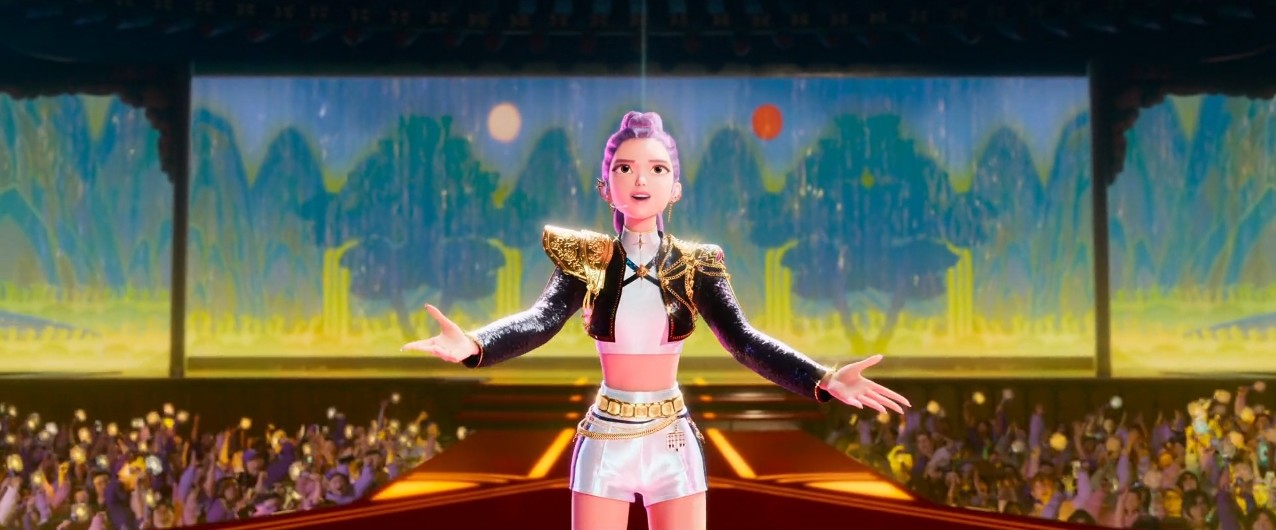
Lately online, there has been a lot of discourse surrounding the films KPop Demon Hunters and Sinners. I’ve noticed that those popular movies have a common theme: using spirituality and music to defeat demons that come out at night.
Why Sinners and KPop Demon Hunters Are Popular Films
In this current age we live in, I’ve noticed a growing shift in how people perceive our world. Since the pandemic, a lot of preconceived notions about our world and what’s real or important have shifted back to a traditional aspect.
Now more than ever, people are searching for ancient and traditional ways to deal with the unique problems we face in our world today. For instance, a lot of people (including myself) have turned back to the land by gardening. This movement gives a sense of increased spirituality and contentment with life as we seek to coexist in harmony with our land.
I’ve also noticed many others picking up ancient pastimes and traditions that had fallen out of favor in our modern world since the pandemic. I can’t tell you the number of self-taught fletchers, blacksmiths, and potters I now follow online on YouTube.
Alongside the physical crafts being preserved, the ancient ways of life when dealing with the supernatural and spiritual warfare have also increased in our world, as well.
The mythologies, folklore, and antiquarian accounts of history that are now written off as fantasy and the antediluvian world has slowly been resurfacing amongst the current state of chaos in our realm.
Petrified giant books are being discovered, dragon footprints and eggs are washing upon beaches, and ancient temples powered by the aether are again attempting to come alive using the natural forces of the earth that have always been present, but long forgotten in our current realm.
In a world growing increasingly strange and foreign to some, the traditional practices of one’s ethnic background are making a stunning comeback.
Shamanism in Korean Culture
There was a film I saw in college that still haunts me to this day. I can’t remember its name, but I know it was from my Cellphone Cinema course. (Note: I studied Cinema Studies in college – I majored in that and minored in Producing. I worked at a few documentary production houses before working at a Japanese Cultural Center and then for myself, ever since.) So, while I’ve seen a lot of films over the years, I sometimes can’t remember the titles, even if I can remember the plot clearly and character names just fine.
In the film I mentioned, the ancient practices of Korean Shamanism were on display – and they were terrifying.
I mean like, female shamans becoming possessed under the full light of the moon, violently turning in circles and dancing while singing at the top of their lungs in order to exorcise a spirit for their client.
Today, shamanism in Korea, at least on the surface in major cities and through media depictions – is not that serious, and honestly seems kind of scammy.
In Queen of Tears, a chaebol head of family was conned out of his fortune based on the false words of a shaman – eventually taking his own life in shame in an attempt to rectify the situation he left his family in.

In The Glory, a shaman was used to tell lies against a living being, until the deceased girl whose identity was being slandered got fed up and murdered the fraudulent woman who was using her God-given talents for ill-conceived activities.
Then of course we have Café Minamdang, which was a Kdrama that started out with such promise and by the midway point, dialed back on the brutal undercurrent themes of crime and exploitation in favor of…playing up the lead actor and actresses’ lack of chemistry, and making a joke of everything remotely serious relating to the plot.

In Café Minamdang, the male lead Nam Han Joon is a scammer, running a fraudulent business as a Korean shaman after a failed career as a criminal profiler. This is related to the aforementioned serious plot undercurrent that was cheapened out on by the end of the series.
My point being, KPop Demon Hunters brought back the roots of Korean shamanism: exercising demons through song – under the guise of the now ordinary and popular cover profession of KPop idols and KPop stars.

The stories of Rumi, Mira, Zoey and Jinu resonated with audiences around the world because it’s fun to imagine that people today living in this world can personally do something about a hopeless situation they found themselves in.
The Huntrix songs from KPop Demon Hunters even charted the Billboard Top Global Charts after a brief rivalry with the Saja Boys, mirroring the film’s real-life battle between good and evil.

In the end Huntrix won, and like in the film maybe the metaphorical (or literal – who knows) Honmoon has been sealed again, picking up where Psy left off with “Gangnam Style” over a decade ago.
The Role of Music in Sinners
I recently watched Sinners and while I wasn’t completely blown away based on how much Ryan Coogler’s new films are always hyped up online, I did thoroughly enjoy the film’s narrative.
For those of you unfamiliar, it focused on Remmick, a Pictish vampire whose ancestral lands had been taken x amount of time ago by Christianity in Saint Patrick’s conquest era as he wanders the deep south in search of a new coven.

Remmick stumbles upon Sammie, the son of a preacher who has the ability to conjure the ancestors (and his descendants) through the power of music. After recently losing his wife in a battle with the Choctaw vampire hunters, Remmick turns two local Klan members into vampires and attempts to gain entry into the local newly-opened American Blues Juke Joint run by the notorious Smokestack twins.
The film follows Remmick as he stalks all of the Juke Joint patrons, converts them into vampires all about “equality”, and attempts to steal Sammie’s soul using the Lord’s Prayer during a dark baptismal under moonlit waters.

Sinners also has an undercurrent of spirituality by way of Hoodoo, an ancestral practice that alongside Voodoo, is often attributed to Africa for some odd reason.
One of the characters, Annie, uses a mojo bag to protect her lover Smoke during his travels while he was away from home. Upon his return, she “recharged” the mojo bag and during the final fight with the vampire coven, Smoke’s twin brother Stack that had been turned into a vampire was unable to bite Smoke, allowing him to survive the supernatural fight until he took off the bag and was mortally wounded in a fight with the KKK.

Like KPop Demon Hunters, Sinners relied on ethnic spiritual practices, folklore, and the power of music to banish demons and other creatures of the night who were set on wreaking havoc on humanity and quite literally trying to steal their souls.
Stories like the ones these films tell resonate with people because it blends ancient traditions and methodologies used to banish demons and other supernatural creatures by our ancestors in all of the old tales – with a modern twist that is hard to ignore.
But, tell me your thoughts: do you think the spirituality shown in these films resonated with audiences because its themes are now relevant to our current world, again after so long?

Leave your thoughts in the comment section below, we’d love to hear from you! Also be sure to follow us for more Korean Culture, Folklore, and Movie Discussions!
☆ In Asian Spaces



Leave a Reply