
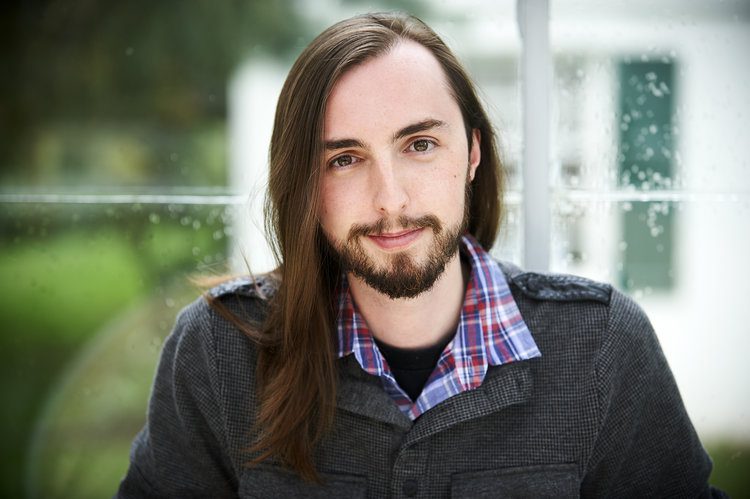
From the gothic-rock and Celtic-infused score of the cult-favorite SYFY horror-comedy series SurrealEstate to the intimate, visceral emotional core of the TIFF-acclaimed feature film Quickening, Spencer Creaghan’s diverse film composer oeuvre stands out for its unique blend of classical orchestration and modern genre influences—including his signature touch of folk music and metal.
The Voice Behind the Score: Composer Spencer Creaghan on Music as Character
We sat down with the composer, whose soundtracks are distributed by the prestigious Milan Records, to explore his creative process, how he applies his philosophy of “Music as Character,” and what it takes to score everything from high-stakes drama to profound psychological stories.
We even learn that Spencer has even taken influences from Eastern media, such as anime to blend musical scores, creating cinematic notes that almost seem to transcend time itself.
Your score for the SYFY series SurrealEstate is noted for its genre-bending mix, often incorporating Celtic/folk, Gothic rock, and traditional orchestral elements. How do you approach creating a cohesive musical identity for a show that balances humor, melodrama, and supernatural horror, especially with the challenge of each episode featuring a new “haunted house” that often requires its own unique theme?
You said it! SurrealEstate is a massive undertaking in balancing styles, instruments, genres, and emotions. I’m a big fan of Anime and definitely take inspiration from it in how to find this balance, a big takeaway being the use of bold melodic themes and unique instruments for each character, idea, or location; sometimes even style!
Early into the show, I approached the afterlife and “other world” with the use of Celtic instruments and ethereal voices, as well as a melody that we called “Letting go.” So whenever I need to introduce the idea of letting go or of the afterlife, I use these instruments and this theme regardless of whatever emotional genre we may be in, and it always helps bring out that emotional impact needed for the moment.

The show balances both series-wide musical elements and episode-specific ones, so whenever we’re in a new musical territory for an example – even the most outlandish ones like dog music, or bathtub choirs – being able to lean on our usual suspects of musical material keeps the show locked in, and gives extra breathing room for the rest of the music to be crazy and bold.
This is something I’ve noticed Shonen anime does really well, especially during different seasonal arcs with characters that only show up for a few episodes but make a lasting impact, and I think it seeped into my process when writing SurrealEstate.
Haya Waseem’s Quickening, which premiered at TIFF, is a deeply emotional, visceral, and often dialogue-minimal film about a young Pakistani-Canadian woman’s internal struggle. Could you discuss the process of scoring such an intimate, character-focused debut feature? How did you use the music to articulate the protagonist Sheila’s isolation and internal turmoil, particularly in moments where dialogue was absent?
I love this question! Quickening was one of the hardest scores I’ve ever had to write. The literal concept of that feeling of quickening spoke strongly to me: the first feelings a mother has of her baby within the first trimester.
In my music, I’m always trying to evoke not just the audience’s emotions, but also their imagination, so my goal here was for the music to sound like big inhales and exhales mixed with little bubbling feelings felt within you – those first signs of a baby.
A solo violin playing light, chirping harmonics evokes the literal feelings of the baby’s motions and life, while the deep swelling string chords were the lungs of the mother filling with comfort at the feeling of her child, as well as hinting at later contractions during birth.
The whole score was to evoke the images of a mother and her baby – both in the womb and upon their birth. There are moments of a soft lullaby in female voice, clarinet, and harp (all calming instruments), as well as collective vocal chanting inspired by women’s circles who help during birthing in some countries, and then of course, the big string swells and violin chirping.
However, as Sheila’s story is unique to this experience, we also needed the music to showcase, as you said, her isolation.
So in contrast to the lush orchestra for that motherly comfort, Sheila’s own music is hollow, almost existential, and ghostly. A solo piano that’s heavily processed that it almost sounds like it exists in a different universe, unable to grasp or hold – like how Sheila feels in her family and relationship during this period of time.
An interesting thing to note, however, is this haunting piano plays the same “breathing” theme that is heard in the strings and developed throughout the film. Two chords: rocking back and forth– for breathing as a calming method is used not just for mothers, but also for anyone going through inner turmoil such as a panic attack or depression.
Where one pallet represents comfort and hope, the other represents isolation and dread, the merging of them at the end is one of my favourite pieces of music I’ve ever written and can be heard on the soundtrack in the last track “Sunrise.”
You’ve mentioned in past interviews the concept of the music becoming its own character or embodying a metaphysical force within a story. Can you give an example of this philosophy in practice—perhaps how it manifests in the investigation theme on SurrealEstate or the emotional themes in Quickening?
Perhaps it’s the scores I grew up on, but I have a deep profound belief that music should never just be a “background” sound to be “felt but not heard.” To me, music should exist as its own character alongside the actors, locations, sets, costumes, and everything else that has a physical presence. Music may not have a physical body on the screen, but it does have an auditory one, which is felt quite strongly by the audience: I choose to embrace that auditory presence and use it to embody the metaphysical and psychological themes of the story.


You bring up the investigation theme and this is a great example: that theme was originally called “Count Down to Witching Hour” (and it still is on the soundtrack), this was because when I originally wrote it for the pilot, the theme was to feel like a descent into hell, or more literally a clock ticking down to midnight, aka a countdown to the witching hour, the time when the barrier between worlds opens and all kinds of ghosts and ghouls appear.
Our characters’ job is to get close to this barrier, to encounter the ghosts and ghouls, and to do their prime work within the Witching Hour, so I wanted the theme to evoke that sense of time running out until the moment of confrontation with the spirit. I’ll never really know if the audience pictures a giant clock counting down to midnight (laughs), but I like to think they still feel that urgent dread as the Roman Agency is investigating!

Similarly for Quickening, the themes were about evoking mothers and their deep love for the baby that becomes internal and primal. Breathing string chords, soft movement in a light harmonic string, vocals to show community and familial love, and then an existential piano to show depression. All of these hopefully tap into a different side of the audience’s subconscious while they watch the film to help them connect with it deeper.
Your influences range from progressive/symphonic metal to folk music and traditional orchestration. How does this eclectic background influence your sound today? Are there specific sonic elements or instruments you bring from your non-classical background (like the use of the Hurdy-Gurdy or heavily distorted guitars) to give your film scores a distinct signature?
I often joke my “big three” are Film Music, Celtic/Nordic Folk, and Metal, and my music often incorporates elements from these, whether overtly or subtly. I’m also a big fan of recording real-world sounds and finding ways to make them musical; even one sound can shape the world of a score for the better!
SurrealEstate features a lot of folk instruments (Irish low whistle, hurdy gurdy, Balkan choir chant, bansuri, gamelan, nyckelharpa, and different lutes), sometimes these are used to connect to a specific culture, other times, they’re used for their unique sound to evoke an ancient presence in the music.
While, interestingly, I don’t use a lot of metal guitars, I do however use a lot of musical riffs and rhythms that I conceived as if they would have been guitar parts, but played on non-rock instruments. SurrealEstate for example, as a harp riff that’s used for Luke’s past, this riff was inspired by the “djent” riffs of TesseracT and Periphery; there’s also a rhythm used in many of the action scenes that was inspired by Meshuggah!
(Contextual Note: As many fans know, the “Big Three” in anime are the shonen classics Naruto, Bleach, and One Piece from the early 2000s. Spencer mentions his “Big Three” as the musical influences most often incorporated into the scores he creates.)
Your credits range from feature films premiering at festivals like TIFF and Sundance to established TV series on cable and streaming. What are the key differences in your composing approach or workflow when scoring a feature film versus an ongoing television series? Does the medium affect your creative choices?
Everything comes down to the story. My job is to tell the story through its music. The medium may affect some of the more technical aspects (how much music we’ll need, where to place it, stingers for act breaks, etc.), but the attitude is always the same: represent the story, its themes, and its subtext through the music so as to immerse the audience deeper into the world of the story.
I do this by writing themes, creating a musical palette that is unique to the film, and then mapping out where and how to use these themes.
For TV, you often need a few more themes than a feature film, and some themes may only last one or two episodes, while others will be ongoing for the whole series – so they better be good! (laughs) TV also allows for a lot more development of themes that can further connect the audience to the story – SurrealEstate has a lot of these.
Whilst for a feature film, at least the more indie dramas I’ve often scored, there’s maybe only 30-40 mins of music in total, with maybe 1-3 themes. Sometimes the whole score is built from only 1 musical idea! It’s the fun part of this job that makes it exciting every day.
As a Canadian musician, what does it mean to you to have your work, such as Quickening, represent Canadian filmmaking on a major international stage like the Toronto International Film Festival (TIFF)? How do you feel the Canadian film music community is currently evolving?
The Canadian Film Industry has always been like an iceberg; it seems so small and insignificant, until you hit it and you realize how big it really is and how influential. So, it means the world to be a part of that iceberg.
Quickening is a deeply Canadian story as it’s also an immigrant story, specifically a Pakistani immigrant. Canada is a country of immigrants, dating back hundreds of years, and I imagine the stories we tell today are not too dissimilar, deep down, to those of the past.
To have Quickening play at the Toronto International Film Festival was powerful, not just for people to see our work, but also to hopefully connect with this film’s story of a young first-generation Canadian dealing with struggles internal and external that many people can relate to – and hopefully helped them in their own lives. Which is all we can ask for when creating art!
Your soundtracks are released through Milan Records, a prestigious label known for its high-profile scores. What is the value of working with a dedicated soundtrack label, and how does the process of curating an album for a public release differ from composing the cues for the picture itself?
I’ve been grateful to work with Milan Records for a few of my scores!
A bucket list dream is to score an anime series or film, and Milan has released some of my favourite Anime scores lately, like [Mamoru Hosoda’s film] Belle and [Studio Ponoc’s] The Imaginary. So it’s been really exciting to see them take off into that market from when I began working with them.
I like to build my soundtracks to tell the story as its own medium of art.
For SurrealEstate, I’ll take the individual cues from a specific episode and re-edit them together into a 5-7 minute “suite” that would be a more engaging listen than just a collection of small 30-second cues. Even how I’ll structure the soundtrack may occasionally differ from the series order as I like to start with the theme suites so the listener gets comfortable with the themes, and then send them down the story, so they can hear the themes evolve and develop with exciting results.
I also tend to name my soundtrack songs as a way to evoke the listener’s imagination and less to describe what was happening during the scene – Quickening’s closing track “Sunrise” being a great example of this.
While I do try to keep my soundtracks on the shorter side, I have gotten carried away with longer albums for SurrealEstate – another inspiration from Anime perhaps, ha!
From the cinematic gothic flair of SurrealEstate to the emotional depth of a film like Quickening, you’ve demonstrated remarkable versatility. As an award-winning composer for film, television, and even video games, what new creative challenge is currently at the top of your list? Are you aiming to delve deeper into the narrative opportunities of interactive media, or is there a specific film or TV genre you feel you haven’t yet put your signature stamp on?
I’ve become an avid reader and have been very inspired by the renaissance of fantasy books that have taken the 21st century by storm, with Brandon Sanderson’s Mistborn series being a highlight.
Over the past few years, I’ve been writing a Mistborn orchestral suite, written in the concert music style, that was just recorded with orchestra and gamelan ensemble. The plan is to release that publicly in a few months, so keep an eye on that!
SurrealEstate gave me an amazing taste into the world of fantasy and supernatural scoring, which I live well at home in and would love to keep playing in, as well as dabble in some science fiction scoring, especially as more of these fantasy books get adapted into Film and Tv, I would love to be able to score even just one!
Beyond these, I’ve mentioned my love for Anime a few times, and I think that is high on my bucket list now as a medium to score one day. The stories are deep with rich, powerful characters, and its music tends to merge many of the styles I love creating in. Here’s hoping for the right project to come along one day!
Thank you for a great interview, Spencer! I hope to one day watch and review an anime series with a musical score written by you! Follow Spencer’s creative journey on his website and Instagram page!
Leave your thoughts in the comment section below, we’d love to hear from you! Also be sure to follow us for more Interviews with Film & TV Creatives!
☆ In Asian Spaces ☆ Ephesians 6:12 ☆



Leave a Reply