
Capturing the Fleeting: Memorizu (Tribeca 2026) Film Review
Winning the Best New Narrative Director Award at Tribeca Festival, Miiku Sakanishi’s debut feature “Memorizu” is a pensive meditation on time, memory, and their intersection against the backdrop of the rural, but emotionally vibrant, experiences of everyday life in a small town on the southern island of Kyushu in Japan.
Miiku Sakanishi’s Award-Winning Best New Narrative Director Debut
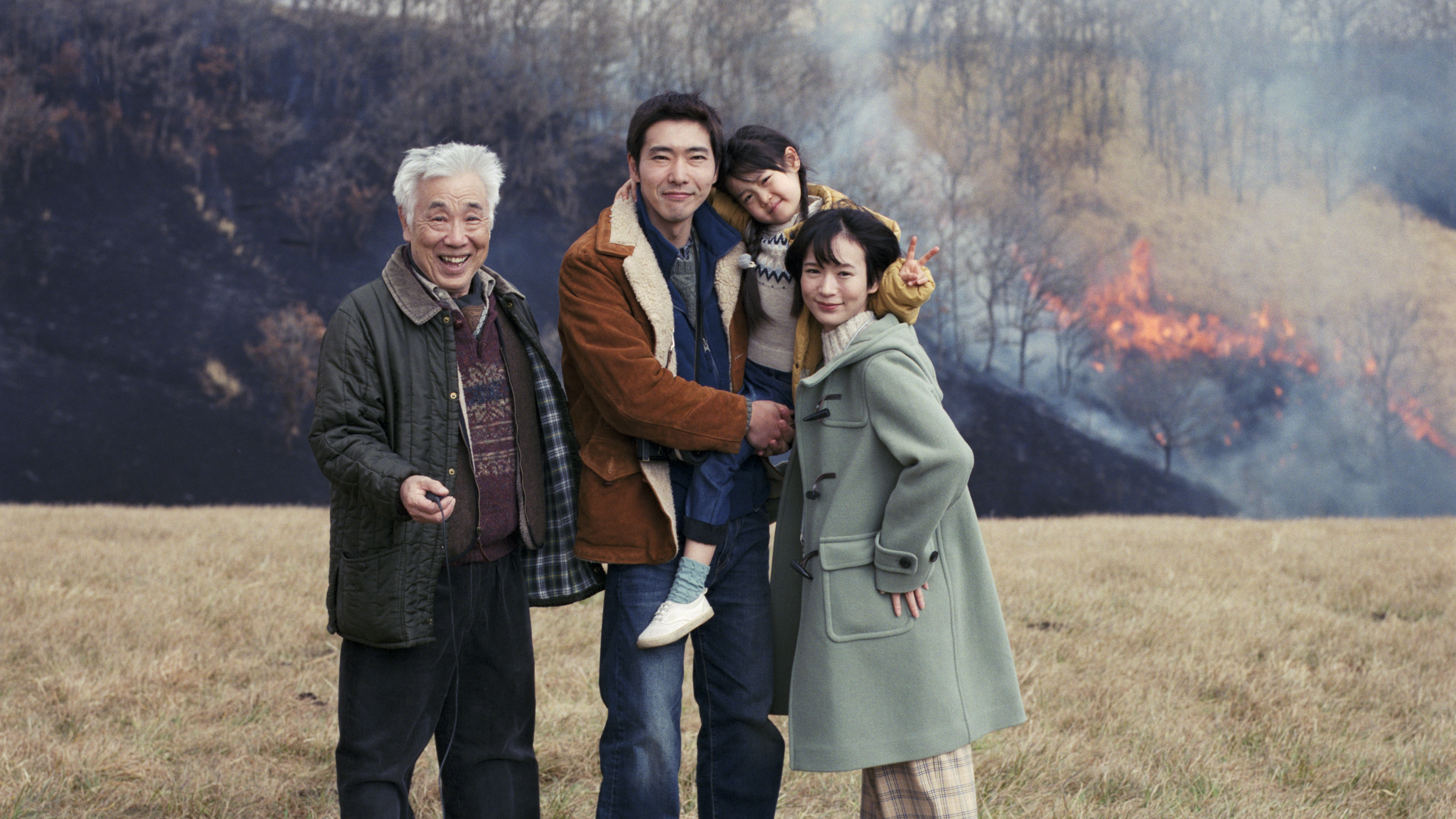
Yuta (Tasuku Emoto) has a father-in-law, Makoto (Issey Ogata), who runs a photography studio in a rural town in Kyushu. Makoto manages to capture the authenticity of the moment in his subjects, often doing a goofy smile that releases tension in the room and immediately allows the photographer to capture the individual’s true self on film.
In juxtaposition to this, Makoto’s daughter, Yuki (Moeka Hoshi), spends her days robotically capturing the memories and experiences of others at work, all the while dodging odd questions from the couple’s daughter, Hana, regarding her mother’s “secrets” and notably detached behavior while father Yuta is not around.
The Rhythm of Kyushu: Rural Landscapes and Everyday Routines
Yuta soon falls into a daily loop of following Makoto’s footsteps through town while on walks with the studio owner’s Shiba Inu. Finding comfort in the predictability of this routine, slight variations in his daily walk trigger Yuta’s urge to document observed changes with his camera phone.
The sleepy but welcoming town soon feels empty following the death of Makoto’s close friend, a man similar in age to the now hunched-over, crutch-bound elder.

In a stark confirmation of the withering vitality of those around him, Yuta takes a different route on the day his father-in-law attends his late friend’s funeral. The town is now seemingly empty: no cyclists meet his path, the horse groom is absent, and even the old farm ladies who work in the field and the mysterious truck driver have all disappeared from their extensively documented posts.
This change haunts Yuta’s mind as he questions the reality he had grown accustomed to, and mourns the loss of a man he had never met, but felt he had known based on shared anecdotes by Makoto.
Nature’s Cycle of Rebirth: The Final Preservation
Prescribed burns ignite the land encased within the mountains that serve as a border to their small town’s world. Makoto is afraid of the chaos, while Yuki (who may or may not have realized that she sacrifices her time and cherished memories far too often for others) believes the cycle of death and rebirth found in nature is beautiful. Makoto smiles sadly after hearing Yuki share the same sentiment as she did in childhood, and this harkens back to a prior, meditative sequence moments earlier.

Missing his late wife Shiori (Yu Kashii), Makoto shows Yuta footage of child Yuki and his late wife at a spot Yuta immediately recognizes. Through the loud, rhythmic clinging of an antique slideshow, photo images blur together between past and present, creating an organic home movie that shows that although people may change, the places – the rural landscapes found in nature – remain the same.

Comforted by this passage of time, Makoto seems to come to terms with his morality, and the preservation of human life and its records under his careful stewardship. He passes the mantle, his camera, onto his son-in-law, Yuta, whose first act is to document Yuki’s surprise discovery of a lost voicemail from her late mother that Makoto had silently held close all this time.
Why This Quiet Japanese Drama is a Must-Watch Indie Feature
In Miiku Sakanishi’s Filmmaker Statement, Sakanishi was interviewed and asked a question regarding the overarching theme of recordings and memories in his film, and the importance of the character Makoto’s photo studio:
“When you take photos with a film camera, it’s almost as if it gives you a determination to take something good. It’s bound to be developed and remain as a physical object. Shots taken in a photo studio also have an obvious self-consciousness about them, a certain special something. People who have their photo taken surely won’t ever forget that day as well.”
Through these simple, seemingly meaningless acts of saved voicemails, silly photographs, and mundane video clips of everyday life, “Memorizu” weaves a powerful tapestry of preserving the memory of one’s life against the changing cycle of nature’s death and rebirth that can be observed just outside of our home’s window frame.
What moments in your own life has “Memorizu” inspired you to preserve?
Leave your thoughts in the comment section below, we’d love to hear from you! Also be sure to follow us for more Tribeca Festival News & Reviews!
☆ In Asian Spaces ☆ Ephesians 6:12 ☆




Leave a Reply