
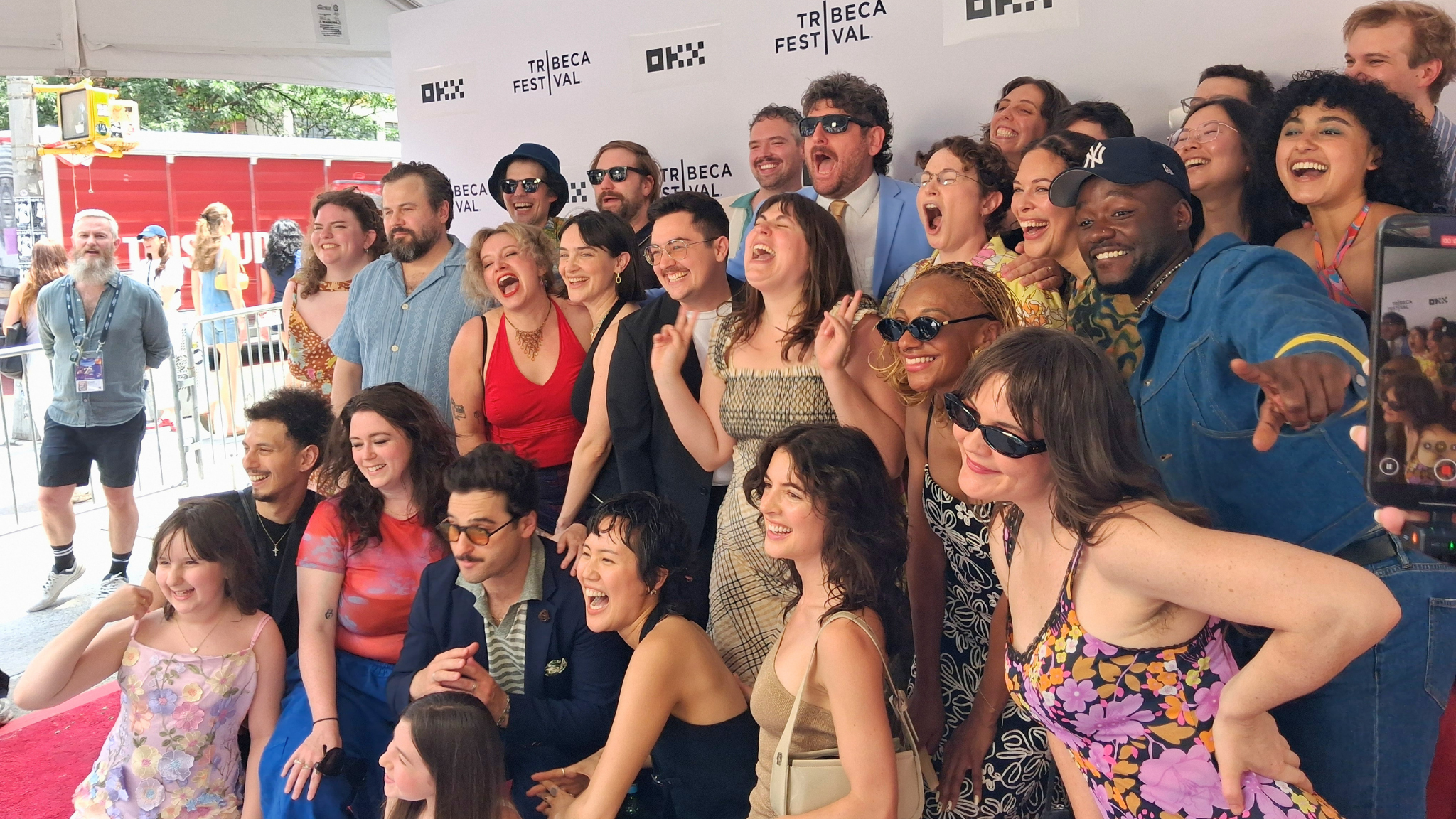
Jess Zeidman’s multi-vignette ensemble comedy, “Human Theories”, takes an intimate look at the interpersonal connections of everyday New Yorkers. Beautifully capturing the (sometimes stark and ironic) realities of modern city living, and the successes of the indie filmmaking experience.
Tribeca Festival 2026: The World Premiere of Jess Zeidman’s ‘Human Theories’
Zeidman’s experimental love letter captured the seasonality of eclectic emotions and a flurry of ever-changing situations (and situationships) in New York City through a diverse ensemble cast of over 50 actors, sprinkled across 40 uniquely humanistic stories.
An Experimental Love Letter to Modern New York City Living
From that unspoken feeling of dread that washes over you after believing you are being followed home late at night by an unknown assailant, to having somebody (admittedly) ‘weird’ but harmless sit a little too close to you in an empty theater, Zeidman’s expert observations of average people just trying to live and (dare I say) ‘make it’ in the city are spot on.
The City of New York itself becomes a character in “Human Theories”, acting as the ever-present friend who has all of the gossip but never shares their true feelings on what they observe about those around them. It is in this premise that the experimental film shines, acting almost as a documentary that holds a mirror up to Native New Yorkers – and ‘Transplants’ alike – to show our unique synchronicities, insecurities, and triumphs through interconnected vignettes that could only happen in The City That Never Sleeps.
Exclusive Red Carpet Interviews: Inside the Production of ‘Human Theories’
We had the opportunity to speak with the director and a selection of producers while attending the ‘Human Theories’ Red Carpet and World Premiere at Village East by Angelika during Tribeca Festival.

Director Jess Zeidman on the Jigsaw Puzzle of Indie Filmmaking
In Asian Spaces: “Your Director’s Statement mentions that shooting a few days a month for nearly a year was a purposeful experiment to capture New York’s shifting seasonality. From a production standpoint, what was the biggest challenge or the biggest joy of keeping the momentum of the film alive month after month while filming?”
Director Jess Zeidman: “ The biggest challenge was scheduling, hands down. I know everyone knows this, it’s impossible to schedule one, two, three people, imagine scheduling a monthly film shoot. Scheduling? Biggest challenge.
The biggest joy was seeing the movie come together bit by bit by bit. I don’t know if you like to do jigsaw puzzles, but it is that feeling of like another piece, another piece, another piece.”
In Asian Spaces: “Yes!”
Director Jess Zeidman: “And so, that was what it felt like. And editing it as we went meant that we could really see it, and shape it.”

Director Jess Zeidman at the Tribeca Festival World Premiere of ‘Human Theories’
In Asian Spaces: “So this film is described as an experimental love letter to the awkward struggle of modern city living. What is one awkward struggle of living or working in New York City that you think the film captures perfectly?”
Director Jess Zeidman: “ It definitely captures the feeling of reading someone else’s texts on the subway.”
In Asian Spaces: “I’ve done that before, while looking through the window reflection” [laughter]
Director Jess Zeidman: [laughter] “Yes!”
In Asian Spaces: “What do you think people should take away from this film?”
Director Jess Zeidman: “I think people should come away and think about all the ways that we’re awkward and weird, but we are in this together.”
In Asian Spaces: “Thank you so much for your time!”
Director Jess Zeidman: “Thank you!”
Producers Arno Mokros and Yoko Kohmoto on the Blessings of Art
In Asian Spaces: “ From a production standpoint, what was the biggest challenge or the biggest joy of keeping the momentum of the film alive month after month while filming?”
Producer Arno Mokros: “ Well, everyone has very active lives, and so it’s also being responsive and dynamic to ‘you have family needs’, ‘you have to travel’, ‘you have another job’. And we tried to do our best to make it all work for everyone, regardless of those things, and sort of respect the likeness in a way, somehow.”
Producer Yoko Kohmoto: “ I think that the hardest and the biggest blessing of this whole project is that people were able to work around those things, myself included. And that with just the state of the world as it is right now, to just think about how we can still make art amongst everything else in our real, ‘real lives’ and the time of it was really, really special.”
In Asian Spaces: “ What was one awkward struggle of living or working in New York that you think this film captured perfectly?”
Producer Arno Mokros: “A lot of things. I feel like…when I get to the front of the deli line to order a sandwich, and I forget everything about me that’s ever happened…”
In Asian Spaces: [laughter]

Producer Arno Mokros at the Tribeca Festival World Premiere of ‘Human Theories’
Producer Arno Mokros: “It’s like I can do public speaking all day long, but that is what actually scares me.”
Producer Yoko Kohmoto: “ I’m always thinking about whenever little things happen in my life, you know, today I put on these huge Band-Aids on my ankles…” [Kohmoto shows her ankle to the camera]
In Asian Spaces: “Oh, yeah”
Producer Yoko Kohmoto: “ Just in case, and also because I got a blister yesterday. I was like, this is one of those things in life where you’re like, ‘Yeah, this is a little weird and like funny, but we’re gonna roll with it’. I love this movie, and I’m so excited for everyone to see it!”

Producer Yoko Kohmoto at the Tribeca Festival World Premiere of ‘Human Theories’
In Asian Spaces: “ Thank you so much for your hard work!”
Producer Yoko Kohmoto: “Thank you so much”
Producer Arno Mokros: “Thank you”
Casting Matrix Triumphs: Tam Sackman on Managing an Ensemble Cast of 50
Producer Tam Sackman was “very involved” in the arduous task of casting over fifty actors for the film. We asked Sackman about their experience working on the production.
Producer Tam Sackman:
“I was very involved in the casting process and less in the production process. But I would say that we learned so much, and I think we learned what it’s like to make an imperfect film, right?
And how the imperfections of a film, being okay when it’s a rainy day, and not being what you expected. Being okay when, we don’t have the location we thought we would have…and figuring out how to best use the space that we have, and the people that we have access to no matter what every month.”
Despite all of the logistical challenges of modern indie filmmaking, Sackman thoughtfully finishes that “ We made a film that feels more sincere and more genuine at the heart of it” when reflecting on the experience.

Producer Tam Sackman at the Tribeca Festival World Premiere of ‘Human Theories’
When asked about one awkward struggle of living and working in New York City that the film captures perfectly, Sackman humorously replied: “I think the whole film has the energy of when you wave at someone, but they don’t see you”.
Producer Tam Sackman: “And, you’re kinda like, ‘Ooh, was I… Is it weird that I did that?’ And I think everyone does that sometimes, and it’s like we are all meeting strangers that are awkward to each other all the time. And because of that, we’re better off for it, actually.”
Post-Premiere Q&A: Centering New York City as an Interconnected Character
The energy inside the theater for the world premiere of ‘Human Theories’ was absolutely electric, with a good chunk of the ensemble cast, crew, and their friends packed into the audience.

‘Human Theories’ Post-Premiere Q&A at Tribeca Festival
Everybody was high energy, and you could tell how much pride all involved had for their film. Here are a few takeaway gems from the post-premiere Q&A surrounding the film’s production and concept:
Q: What inspired you to make this project and center New York City as a character, along with all of the other characters you introduced us to?
Director Jess Zeidman: “I have always wanted to live in New York City. I grew up upstate and have idolized living here forever, and so I’ve been here for the last eight years, and I think something I love about living here is how we’re constantly thrown together, and also choose to be together with whoever ends up in our path.
And it is this sort of awkward, and amazing, and funny, and lonely place to live. So it was just a pleasure to show those small interactions that we’re all having, ’cause we’re all right on top of each other.”
Q: ‘Human Theories’ is such a tapestry of all the lives that coexist together in the city. But when I first watched it during our review phase, it scratched such a good itch for me in the way I’m super nosy. [audience laughter] …Could you talk to me about why you chose this format to explore the lives of those who are living in New York City?
Director Jess Zeidman: “ I think that it’s really hard to sum up what living here is like with one person. So I was interested in, sort of the process-oriented thing of working with as many people in as many places as possible to show what it’s like for all of us, living here. And I just like the kind of puzzle format. I think it’s fun to watch, and it’s fun to make.”
Q: Tam, I would love to talk to you a little bit about the casting process. Did you have people in New York City who were curious about casting themselves in the film? Could you talk to me about your casting process?
Producer Tam Sackman: “ Certainly. The casting process was a collaboration between myself and Jess. Jess had a few people that she had in mind already when she started the project. And then she created one of the most, unbelievable producorial documents I’ve ever seen in my life called, ‘The Casting Matrix’. [audience laughter]
Which is where she put basically everyone she was looking for, how they fed into each other, and which scenes they correlated to, and anyone that we were looking for. I chose a few freaks to send her way [audience laughter] and she picked from them who makes sense for those two scenes that they’re each gonna be a part of.
I have an amazing community of people that I work with who are actors and comedians, and we kind of just were like, ‘Who do we know?’ [laughs] and everyone was down to play and experiment on this, low-key experimental film.”
Cinematographer Leo Gallagher on a Documentary Approach to Narrative Film
Q: You all shot all across the city. Can you tell me about your approach to filming?
Cinematographer Leo Gallagher: “I think a big part of it was trying to keep the crew and the footprint as small as possible. A lot of those places were real locations, real apartments. My apartment was featured twice. [audience laughter and cheers] And yeah, trying to keep it small and just trying to keep it honest.
Jess really wanted a documentary kind of approach, and so we married that with the narrative…we shot the film over a year, so trying to keep it consistent over a year was a big task, and I think we did it.”
Closing Thoughts: Why ‘Human Theories’ Shines as a Uniquely NYC Indie Film
‘Human Theories’ was a feat of modern indie filmmaking that pushed the boundaries of narrative film and documentary parameters in the heart of New York City. Through its colorful ensemble cast and insightful glimpses into the pocket world of everyday city dwellers, the film ignites within viewers the passion, drama, and oftentimes weird situational confusion that can only be experienced and felt in the city that is otherwise indescribable without this film.
What weird, or awkward accident of modern city living do you cling to the most?
Leave your thoughts in the comment section below, we’d love to hear from you! Also be sure to follow us for more Tribeca Festival News & Reviews!
☆ In Asian Spaces ☆ Ephesians 6:12 ☆




Leave a Reply