
The popularity of anime seems to have skyrocketed overnight, but it hasn’t always been the case. From diverse stories to mature themes that resonate with viewers – why exactly is this creative medium so popular?
Why Is Anime So Popular?
For years, Western mainstream audiences ignored Japanese anime as if it were cartoons targeted at kids, when in reality the medium of animation allows for more freedom in regards to storytelling and its themes.
Although time-consuming, animated content allows stories of fantasy and horror to come alive in ways traditional film and television cannot. It is this telling of diverse stories, not limited to the constraints of 2D space that made anime so popular with fans in America, and other western countries.
The diverse variety of stories told in anime really resonates with audiences young and old, where mature themes are fully explored and not glossed over in favor of what’s trendy, what is another needless franchise sequel, or what’s nostalgic – something the West and Hollywood only seem to acknowledge.
What Makes Anime So Special?
What makes anime so special to Western fans is the fantastic worldbuilding.

Often set in real locations across Japan (or even outside the country) and used as promotion, anime tourism promotes travel to various regions and prefectures across the island nation.
A popular example of anime pilgrimage is the stairs to Suga Shrine, where an adult Tachibana Taki and Miyamizu Mitsuha meet at the end of Shinkai Makoto’s film Your Name.
On top of blending reality with fiction, stories in anime are often original – set in imaginative worlds and filled with characters that all have distinct personalities, character designs, and aspirations that don’t overuse tropes or cliches.
Why Anime Is So Popular in America?
Many children in America grew up watching anime, even if they didn’t know it was a Japanese tv show at the time due to an audio dub in English.
Sailor Moon, Pokemon, Hamtaro, Dragon Ball Z, even Digimon or Yu-Gi-Oh! were all classic anime series from the 90s. I think the rediscovering of anime and the transition to Japanese subs is what made anime so popular in America.
Why Do Adults Watch Anime?
The “Big Three” of Naruto, Bleach, and One Piece were shonen series that were heavily watched by both males and females during their orignal runs.

Naruto has gone on to many anime spin-offs, including the sequel series Naruto Shippuden and even Boruto (although admittedly not as popular as the original). Bleach is returning after a long-awaited hiatus to Disney+ of all places, and One Piece is still going strong with over 1,026 anime episodes and counting.
Needless to say, the big three hooked a generation of American children to anime, and the children stayed interested in the creative medium – some even as adults developing an interest in Japanese culture and language as a result of a long-standing hobby.
(I was one such case, studying Japanese on my own as a teen, and in classroom settings as an adult before attaining a job at a Japanese cultural center, and then creating this website that covers anime and Japanese pop culture.)
A Popular But Toxic Anime Industry: as many of us have known for years, the animation industry is built on the backs of exploited workers.
That’s not something we need to rehash each time we have a discussion.
Instead, I wanted to focus on two causal effects happening because of the toxic anime industry here in the U.S. and abroad.
Why Is There A Taco Bell Anime?

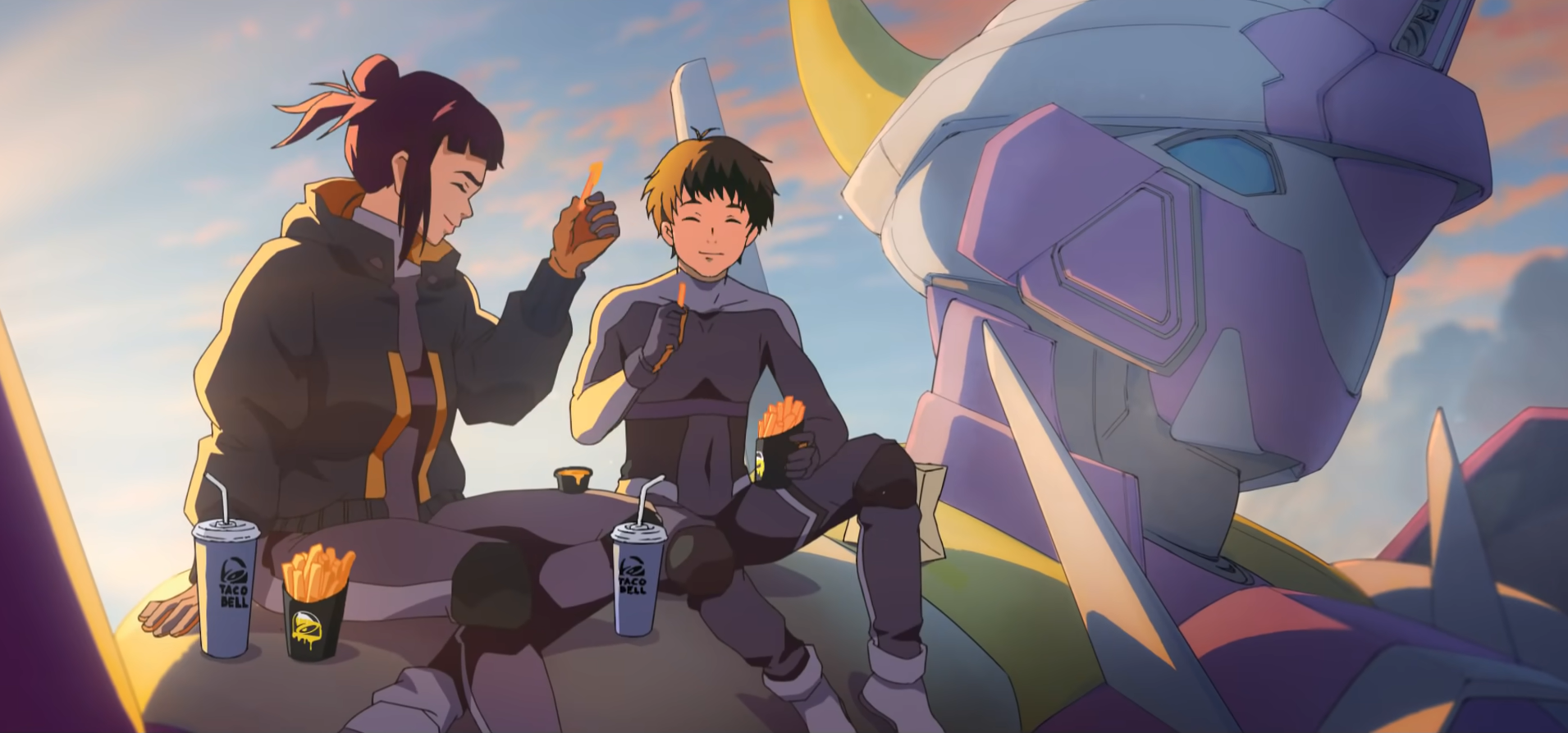
Taco Bell created their own one-shot anime OVA to promote their new Nacho Fries. This is nothing new for the company though, as Taco Bell has gone through a lot of growing pains concerning advertising and brand identity over the decades.
From the authentic Mexican food with the golden bell and southwestern décor arc, to the wholesome (albeit annoying) “Yo Quiero Taco Bell” chihuahua dog I knew and (mildly) liked growing up.
I even used to repeat that phrase, “yo quiero Taco Bell” when I was a kid visiting my Great Aunt and Grandma during summers spent in New Mexico. We’d then all pile into the car and order bean burritos at the drive thru – I can’t remember how much they cost back then.
79¢? 89¢? Who knows.
Then there was the Taco Bell stoner phase – where blazed teens were known to visit the establishment late at night – into the wee morning hours for 99¢ soft tacos that came out to $1.09 with tax.
I stopped eating at Taco Bell during my early twenties after a poor incident regarding my food, but I’ve since witnessed their (Eyes Wide Shut inspired) conspiracy theory phase, blatant creepy and masonic-inspired arc with that one actor from Stanger Things, and now, their anime arc.
Is Taco Bell Actually Making An Anime?
Although initially created to promote their new nacho fries, the Fry Force anime is a mecha-themed commercial that is inspired by Neon Genesis Evangelion. The Fry Force Taco Bell commercial was animated by Luca Vitale and Kylie Matulick of Studio Psyop, along with Yapiko Studio of Japan.
Thinking back, is it because it’s the popular zeitgeist of the moment?
Similar to how hot conspiracy theories were on Reddit, or when Mountain Dew and Doritos were associated with gaming? Or even back when Wendy’s social media account got popular for their (alleged intern’s) snarky remarks which created the golden corporate food wars arc of yesteryear.
Taco Bell never had those sorts of wins in any era, and maybe it’s attempting to be ahead of the trend for a season?
After all, the Taco Bell anime commercial wasn’t even necessarily bad.

Sitting at a mere minute, the Fry Force Nacho Fries commercial has sleek animation, and an OVA storyline that could expand on the mecha civil war, where the fry-seeking kaiju creatures came from, and the Kousuke villain origin story featured during this time.
But again, why anime? And why now?
Is it because of the current dis-ease surrounding the ever-evolving illness that has driven more people into their homes and online in search of content?
I mean after all, that last winter 2021 anime season was heavenly.
We had AoT Season 4, Dr. Stone Season 2, Jujutsu Kaisen, Re: Zero Season 2 pt 2, Horimiya, Log Horizon season 3 and even Wonder Egg Priority. Also Beastars season 2, Yuru Camp season 2, and TPN season 2 – even if that season was an ill-fated one.
My point is that winter 2021 was (in general consensus) the best anime season lineup we’ve had as fans for quite some time. Making up for a delayed production schedule due to strong dis-ease and precautions surrounding the sorority virus.
Moving on, let’s quickly look at another “case study” if you will – Walt Disney-sanctioned animations.
Is Disney making a Star Wars Anime?

In September, Lucasfilm will soon be releasing a Star Wars anthology series on Disney+ in the format of a Japanese anime.
Although I’m sure many fans will be excited for more Star Wars content in the form of Star Wars: Visions, an anime series is another signifier that Disney has inserted their presence into every facet of our daily lives.
From football players (strangely) shouting to cameras “I’m going to Disney World” after winning a Superbowl, to watching the morning news anchors robotically state “Disney is the parent company of ABC” after being shown another Disney – Star Wars – Marvel iteration promo that will no doubly piss off fans.
Even channels like National Geographic (now re-branded ‘NatGeo’) can’t show some footage of giraffes walking an African sahara anymore without a celebrity-endorsed narrator who has ties to a past film from the company’s golden years.
The rat controls the water supply, so to speak.
Star Wars Galactic Starcruiser Controversy
So, it was no surprise that Disney pissed off (now long-suffering) Star Wars fans once again with their $6,000 LARP inspired Star Wars Galactic Starcruiser hotel experience.
(“Don your galactic best” and whip out those credit cards for daddy, nerds” – Disney, probably.)
Even the theme parks are reportedly not doing so hot amid the ongoing dis-ease, according to mainstream media not (yet) owned by Disney.
Now, I’m not implying the two are mutually exclusive, but it’s just mighty interesting fans of the now-annual franchise series are getting a Star Wars: Visions anime series complete with native Japanese voice actors.
Lucasfilm announced the anime anthology series was being made in December 2020, but heavy promotion was only released in early august.
…About a week or so after the outrage surrounding the Star Wars: Galactic Starcruiser hotel making its circuit online.
And that’s all I have to say regarding that matter.
There was one more thing I noticed and wanted to mention:
Manga Adaptations are to Anime, as Webcomic Adaptations are now to kdrama
I’ve noticed more and more mainstream media outlets making tier lists of kdrama to watch on Netflix, or which series are adapted from webtoons.
Not to mention that (many of) these articles are coming from unnamed “staff” (translation: intern or unpaid volunteer writer looking to gain *exposure*) who quite literally write the most mediocre tier-lists followed by straight-up copy-and-paste plagiarism of synopsis on major fansites.
But then again, I think it goes both ways.
I remember seeing some of my screenshots on an official anime series wiki a few years back. I know they were mine because I used to edit the screenshots for my reviews in a certain way. But, it’s all technically copyrighted material deemed free for fair use reviews, commentary, critique, discussion, etc. – so at the end of the day it really doesn’t matter.
But what does matter, is the local and national news stations enacting these same tactics.
These “journalists” with ‘integrity’ leverage their pay-for-play domain authority to write awful articles that take synopsis directly from Crunchyroll.

Write 1 – 2 sentences of nonsense (while spelling a character’s name wrong) only to then list a high CPM paid keyword, and then proceed to nonsensically list every single character (or their voice actors) in the anime series in a spammy paragraph that would trigger, and then disintegrate the credibility of ‘lesser’ websites in Google’s ranking system.
This mess of plagiarism ranks as a top search for those fans who are seeking actual content from anime bloggers, anime reviewers, anime YouTubers, and occasional anime commentators who have authentic followings.
Those fans who want to share their thoughts are regaled to the dreaded 2nd and third pages of Google due to corporate greed.
And… that just isn’t right.
YouTube was viciously taken over by mediocre planted social media stars labeled “influencers” and celebrities.
Twitter was taken over by social justice warriors who do nothing but schedule ‘virtue signaling’ tweets every twenty minutes to their drone-like followers.
Tiktok is a continuous smear campaign for those of a younger generation who just want to have fun and earn a living.
And then there’s Instagram…who is “no longer a photo-sharing app”, has gotten rid of photography promotion in favor of “reels” to compete with websites like Tiktok and YouTube instead of just…sticking to what they are good at, and built them a following.
(Or honestly, even OnlyFans getting rid of nsfw content in favor of featuring…celebrities and cooking shows that you can watch on daytime tv…. or now YouTube, honestly.)
Is Anime Becoming Too Popular?

To culminate my discourse of the above – has anime gotten too popular for its own good?
This is not an attempt at gate-keeping, but rather trying to point out the sheer hypocrisy and corporate greed that determined the sudden interest in “backwater niches” such as anime.
But, tell me your thoughts, and let’s get a discussion going!

Given the current climate, what do you feel the future of anime in the States and abroad will be in the next year?
And, are the corporations bringing new people into the collective anime fandom online a good thing, or is it too soon to tell?
Leave your thoughts in the comment section below, we’d love to hear from you! Also be sure to follow us for more anime discussions!
☆ In Asian Spaces ☆ Ephesians 6:12 ☆



Leave a Reply