
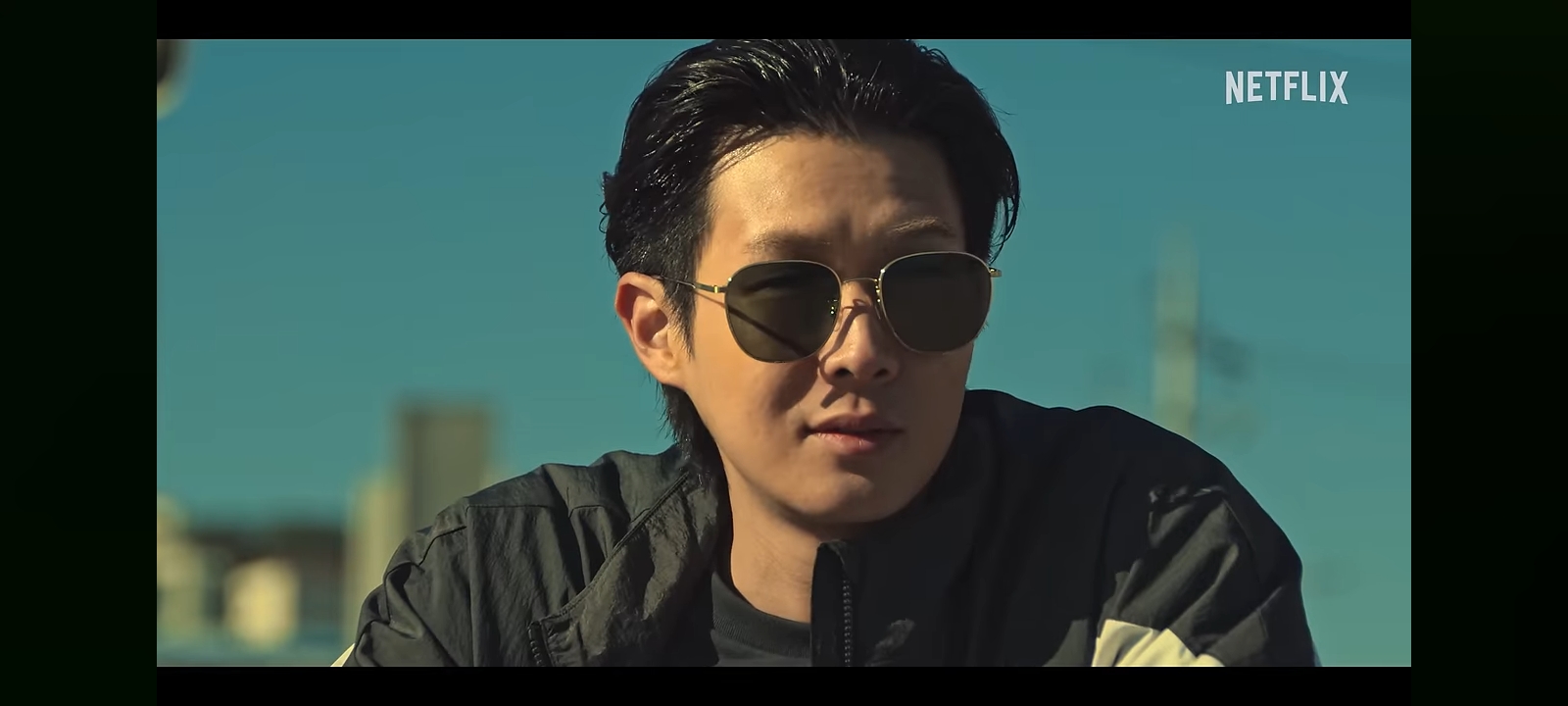
Lee Tang has never defended himself, and now he’s committed murder. But, what if the other person deserved to die?
I’ve got to say, I think A Killer Paradox might just be kdrama of the year for me – which is shocking because it completely came out of left field.
A World Where Everyone is Trash: The Realism of Choi Woo Shik’s Lee Tang
I’ve watched Choi Woo Shik in Parasite, Our Beloved Summer, and The Witch, the Subversion, and couldn’t understand the hype surrounding him. I guess it took a raunchy but highly realistic kdrama to change my mind about Choi Woo Shik.
Everybody in this drama is complete and utter trash – and I love it. It’s not often I watch shows in this genre, but admittedly, it is one of my favorites. I think Hell is Other People and Extracurricular are the last kdrama I watched, where all of the characters aren’t even morally grey- they are just awful people that shouldn’t exist in society.
Which…is kind of what we got in this story.

The Scapegoat Dynamic: High School Bullying and Mandatory Military Service
Lee Tang is a recent military service grad who has returned home aimless in life. For those of you unfamiliar, South Korean men are required to complete mandatory training in the army for 2-3 years due to the ongoing situation with North Korea.
Even celebrities are not exempt, such as members of the K-pop musical group BTS entering service (and being chastised for seeking special treatment from the Korean public) or actors like Lee Min Ho, who left during the height of his fame to serve.
The Cost of Silence: When Systems Fail the Individual
Military service seems to be a very controversial time in many men’s lives, and there are always allegations of bullying and abuse. D.P. is a great kdrama that sheds light on this issue in Korean society.
Lee Tang’s military background and history of being a “stress relief” scapegoat reflect a wider societal struggle. If you’re interested in how K-Dramas tackle these systemic failures, explore our other analyses:
- Save Me: South Korean Cults & The Psyche of Grief – How trauma and a lack of social safety nets drive individuals into the arms of the manipulative.
- Misaeng: Incomplete Life – A look at the crushing weight of societal expectations on the everyday worker.
The Convenience Store Incident: When Common Tropes Turn Fatal
Anyway – Lee Tang happened to be bullied in high school – he was one of two “scapegoats” for “stress relief” in his class. Although he is now friends with the other bullied classmate, Tang doesn’t seem to have adjusted as well to college life as his friend.
One night while working overnight part-time at the local convenience store, Tang is harassed by an older man who is having problems at work. Again, another common theme in Korean drama. Tang, on the clock, obviously lets it slide and eventually gets off his shift at work.
Alleys Without CCTV: The Anatomy of a “Justified” Murder
While walking down a back alley without CCTV cameras (again, a common trope in these types of stories), Tang encounters the man who berated him lying on the ground, half dead. Tang then encounters the man’s friend, a kind gentleman who apologized for his friend’s behavior and even paid for their snacks, starts to pummel Tang and attempted to kill him in the alley for “asking questions” about his friend.
To make a long story short, Tang decides to fight back for once in his life and ends up killing the man with a hammer he borrowed from his job to put up a picture of mountains in Canada. Tang panics and leaves the scene after a seemingly blind woman and her dog witness the crime, leaving behind the murder weapon.
The Killer Paradox: Can a Crime Be a Service?
Thinking he is going to be caught, Tang freaks out over every noise and police siren…until the news breaks that the “kind gentleman” he killed had murdered his friend in that alley, seduced his wife, and went from city to city raping school girls and committing all kinds of atrocities.
And herein lies the Killer paradox: Tang murdered someone, but that person was a criminal…so can it really be considered a crime?
Playing Batman and Robin: Roh Bin and the Vigilante Blueprint
There’s this tech nerd hacker and true crime podcaster named Roh Bin (he had it legally changed) who ends up meeting and helping Tang. Roh Bin has had two partners before, the victim’s father of one of Tang’s vigilante murders, and a deranged older diabetic man named Song Chon with failing hands that somehow, has all the strength of 100 Jason Voorhees combined. Roh Bin mentions that Tang is the real deal, and the two go through the motions of planning and researching targets to kill.
Foreshadowing Fate: The “Robin Dies at Dawn” Symbolism
What is unlucky about Roh Bin is that his fate is foreshadowed in one of his living room posters. There is a large Batman and Robin poster where Batman is holding a lifeless Robin, the text reads “Robin dies at dawn”. Roh Bin believed in Tang so strongly that he even got his teeth filed down to match Tang’s in order to cover up evidence of a bitten apple that Tang left at a murder scene.
But, wanna know the saddest thing about this tale? In the end, it is heavily implied that Tang is no savior or vigilante crusader after all – he just has dumb luck.
Song Chon and the Dark Reflection of Justice
After Roh Bin and Tang murder a highly connected prosecutor who kidnapped, raped, and murdered a schoolgirl (amongst other deeds), the police and higher-ups want to close the case quickly.
The CEO of a shady construction company (and his granddaughter – not Tang’s work, either of those) is also taken out, and not wanting to look incompetent (or have their own dirty laundry aired out), the cops decide to lump Roh Bin and Tang in with Roh Bin’s former psychotic partner, Song Chon’s murders.
We get Song Chon’s sad backstory, and there is a final “shoot out” so to speak between Detective Jang Nan Gam, Tang, Roh Bin, and Song Chon at an old, decrepit factory on the outskirts of a country town. Detective Nan Gam kills Roh Bin and wounds Chon in the process, leaving Tang safe after the scuffle.
Law, Order, and the Gray Area of Justice
Is a murderer “cleaning up” society a hero, or a symptom of a broken legal structure? We see this theme of political and moral compromise across these high-stakes dramas:
- Queenmaker: Political Warfare – How the powerful manipulate the narrative to hide the “Dark Side” of society.
- Trolley: The Impossible Choice – A deep dive into the ethics of hidden pasts and public accountability.
- Live: A Crime Drama with STRONG Female Leads – Seeing the law through the eyes of the police officers on the front lines.

The Verdict on Lee Tang: Divine Guidance or Sheer Dumb Luck?
Tang, wracked with guilt and hallucinations, wants to turn himself in and atone for his sins. He places Nan Gam’s gun to his forehead, and Nan Gam shoots – only somehow the gun that had been firing live rounds now shot a blank.
Nan Gam takes it as a sign of Tang’s “power” or “sheer dumb luck” and walks away before telling Tang that if he continues down his current path, eventually somebody would catch him.
The Warehouse Shootout and the Incompetence of the Law
After the Detective leaves, a fire breaks out. Tang tries to remove Roh Bin’s body from the scene, but a piece of debris falls on Roh Bin’s body and sets it on fire, causing Tang to leave him there – Roh Bin’s arms outstretched like a superhero flying….or somebody calling for help.
Incidentally, Detective Nan Gam and the famous profiler discuss what went down at the warehouse so that they can get their official stories straight. Nan Gam decides to say that Tang wasn’t there at the fight (despite a single surveillance photo of his back suggesting otherwise), and both come to the conclusion that Roh Bin was a megalomaniac, deluded by his own sense of justice.
A Cleared Name and the Cycle of Violence
Learning he has a cleared name after being picked up by authorities in the Philippines on an expired visa, Lee Tang returns to Korea and begins killing again.
Song Chon had a speech about the world “needing” people “like them” – i.e., murderers – to clean up society’s scum, and judging by the incompetence of the police in their world, I’d have to agree.
Maybe Lee Tang is being guided by a higher power to clean up the streets.
But, tell me your thoughts. Have you watched A Killer Paradox? Do you enjoy watching drama with Choi Woo Shik as the lead?
Which murder did you think was the most undeserved? (Mine was the supermarket warehouse worker from Busan…I felt so bad for her when she died).

Uncovering the Hidden Layers of Korean Identity
To understand the “Dark Side” of Lee Tang’s world, we have to look at the historical and cultural pressures behind the screen:
- Are Koreans Too Harsh on Their Actors? – An analysis of the high-pressure social standards and “Cancel Culture” that mirror Lee Tang’s judgment.
- Where Are the Dark-Skinned Koreans Today? – Uncovering how historical class structures from the Joseon Dynasty still influence modern social hierarchy.
- Itaewon Class: Fighting the Giants – How the “underdog” narrative persists as a dominant theme in Korean storytelling.
Leave your thoughts in the comment section below, I’d love to hear from you! Also be sure to subscribe for more Kdrama Reviews!
☆ In Asian Spaces ☆ Ephesians 6:12 ☆



Leave a Reply